


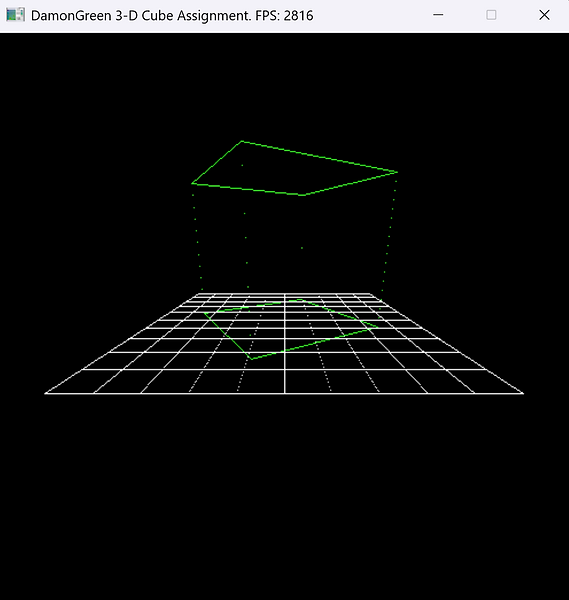
During my Game Development degree, we spent a few courses taking us through computer graphics; the API that can be used for interfacing with different renderers and techniques as well as ensuring we understand the math and all else that goes into the content creation pipeline. We initially were provided with a framebuffer to jump right into BLIT and color formats.

After this we moved on to basic Vulkan rendering, essentially creating our own framebuffers.

Finally, we began using Entt to help us manager our content in a data-oriented manner.
Textured Model Pipeline
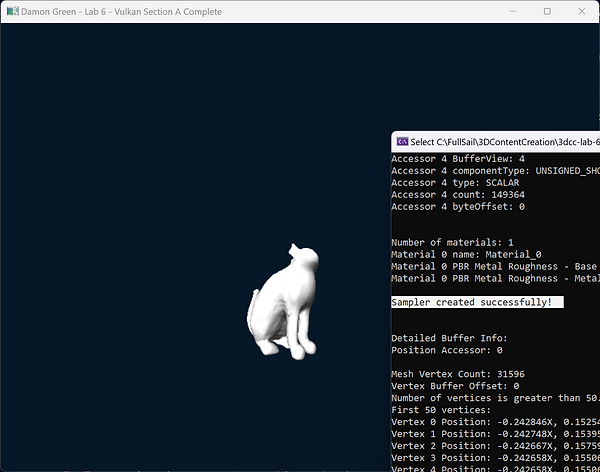

ECS based Gameplay
It was in using an ECS that curiosity began to take hold of me and I began to research how game engines employed them in their own ways.
See, the projects that I had done for school had all required me to hardcode many things. Every change forced me to recompile, assess, and if needed repeat the process. It was effective in teaching me how things worked below the surface, but it was limiting in my ability to easily and quickly make changes. I needed a GUI to assist me.
I spoke with my professor, who happened to also be the course director for many of the above-mentioned courses, and he advised me on attempting to integrate ImGui.
It was at this point that the idea of Vesper fully began to take shape in my mind.